

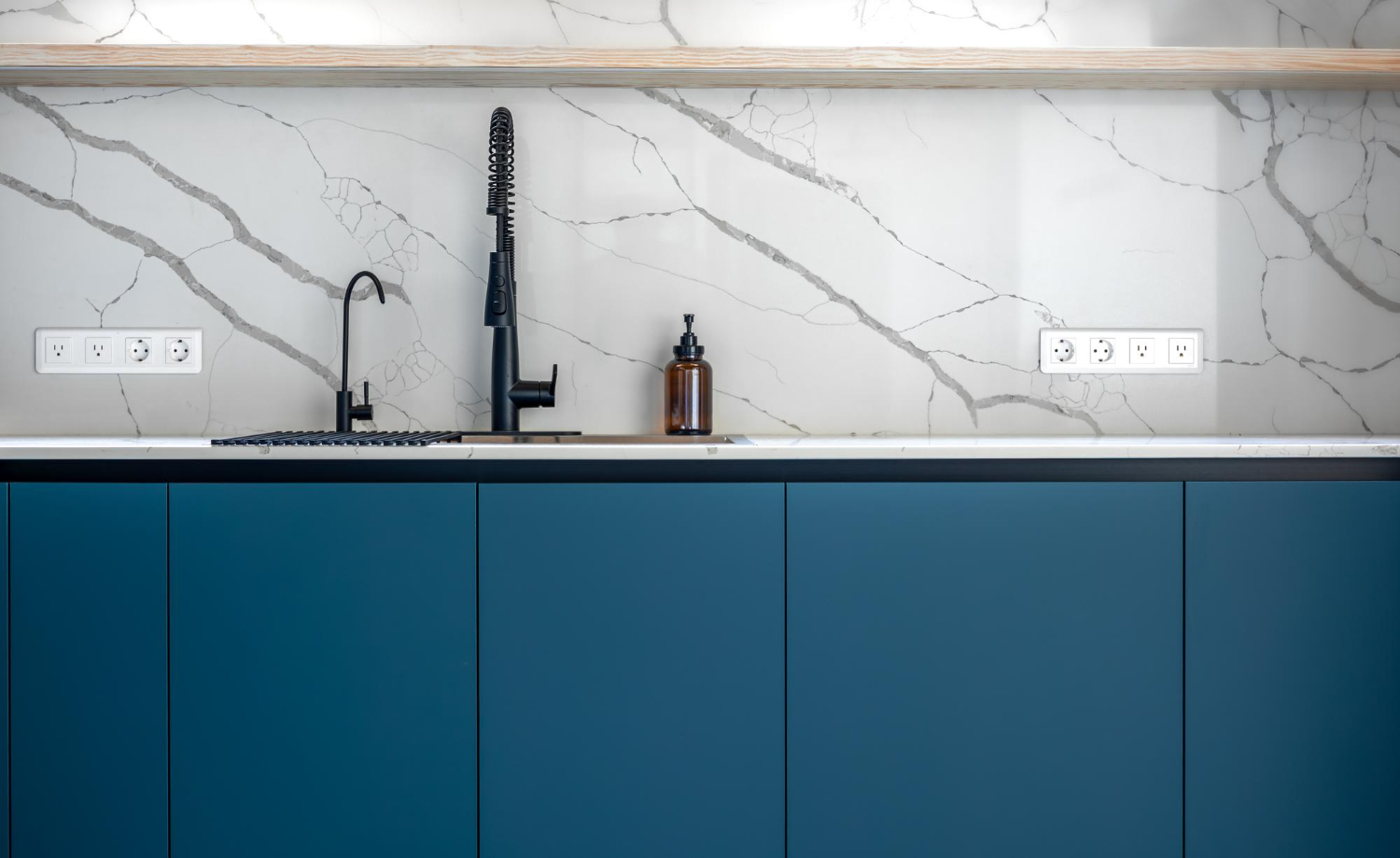
Ultra-thin modern countertops have become a standout choice in contemporary kitchen and bathroom design. Their sleek profile, clean edges, and minimalist appeal fit perfectly with today’s streamlined interiors. But while these surfaces look refined and architectural, there is more to consider than just aesthetics. Thickness impacts durability, installation methods, cost, and long-term performance. Before committing to an ultra-thin countertop, it helps to understand how these materials behave in real homes, not just in design photos.
What defines an ultra-thin countertop
Ultra-thin countertops typically range from about 6mm to 12mm thick, compared to traditional stone slabs that are often 2–3 centimeters thick. These thinner profiles are most commonly made from porcelain slabs, sintered stone, or engineered surfaces designed to maintain strength despite reduced thickness.
The appeal comes from their ability to create a floating, refined look. Waterfall edges appear sharper, transitions between surfaces feel seamless, and modern cabinetry styles benefit from the reduced visual weight.
Material performance matters more than thickness
Thin does not automatically mean fragile, but performance depends heavily on material choice. Porcelain and sintered stone are engineered under high heat and pressure, making them dense, non-porous, and resistant to heat and stains. These properties allow them to perform well even at thinner dimensions.
Natural stone, on the other hand, behaves differently. While granite and marble can sometimes be fabricated thinner, they generally require additional support or backing. Understanding which materials are engineered for ultra-thin applications helps avoid issues like cracking or edge damage over time.
Structural support is not optional
One of the most overlooked aspects of ultra-thin countertops is what lies beneath them. Because these surfaces are thinner, proper substrate support becomes essential. Many installations use a full plywood or aluminum backing system to reinforce the slab and distribute weight evenly.
This is especially important for long spans, overhangs, and waterfall edges. Without adequate support, stress points can form, leading to cracks or failure. A professional installation plan is critical when choosing ultra-thin profiles.
Edge details affect both style and durability
Edge profiles play a major role in how ultra-thin countertops perform. A sharp, square edge emphasizes the modern look but can be more vulnerable to chipping. Mitered edges, where the surface wraps around a thicker-looking edge, provide visual depth while improving strength at corners.
Choosing the right edge style balances appearance with practicality, especially in busy kitchens where countertops see constant daily use.
Installation requires experienced fabrication
Ultra-thin countertops are not a DIY-friendly upgrade. Fabrication requires precision cutting, careful handling, and specialized equipment. Transporting large-format thin slabs demands experience to prevent cracking before installation even begins.
Installers must also account for cabinet leveling, seam placement, and expansion allowances. A skilled team ensures the finished surface looks seamless while performing as intended for years.
How ultra-thin countertops fit modern lifestyles
These countertops excel in modern, low-profile designs where clean lines take priority. They pair beautifully with handle-less cabinets, integrated appliances, and contemporary backsplashes. In kitchens that prioritize visual flow, ultra-thin surfaces can make spaces feel lighter and more open.
However, households with heavy daily use should consider how the surface will be treated. While many ultra-thin materials are durable, habits like standing on counters or placing extreme point loads can create unnecessary risk.
Maintenance expectations stay refreshingly simple
One advantage of many ultra-thin materials, especially porcelain-based options, is easy maintenance. Non-porous surfaces resist staining, do not require sealing, and clean easily with mild household cleaners.
That said, care should still be taken around edges and corners. Cutting boards, trivets, and mindful daily use help preserve the refined appearance that makes ultra-thin countertops so appealing in the first place.
Cost considerations beyond the slab itself
While ultra-thin countertops may appear less expensive due to reduced material thickness, fabrication and installation can offset that assumption. Specialized handling, reinforcement systems, and skilled labor all factor into the final price.
Viewing the investment holistically, including longevity and design impact, provides a clearer picture than comparing slab prices alone.
Who benefits most from ultra-thin designs
Ultra-thin countertops are ideal for homeowners who value modern aesthetics, precise detailing, and architectural design. They shine in kitchens and bathrooms where visual impact matters as much as function.
For those who want a bold, contemporary statement without bulky surfaces, ultra-thin countertops deliver a refined, high-end result when planned and installed correctly.
Visit our Chico showroom to explore modern countertop options
At Dave’s Tile City, we help homeowners make confident countertop decisions by pairing modern design with real-world performance. Our Chico showroom features a wide selection of countertop materials, including ultra-thin modern options, backed by expert guidance and professional installation support. Stop by to explore styles, compare materials, and get help choosing a surface that fits both the design vision and daily living needs.


